





Impact of Toys on Child's Growth and Development
Toys stimulate concentration levels and enhance attention span and memory. Children's cognitive development during childhood years is nurtured by toys to learn, grow, and express themselves through play. In turn, cognitive development during childhood improves children's ability to approach language, problem-solving, creativity, and social interaction. Toys can be categorized into several types. Through interaction with all types of educational toys, children develop hand-eye coordination, cognitive thinking skills, critical thinking skills, and spatial awareness. Learning through play is one of the easiest ways for a child to absorb information.
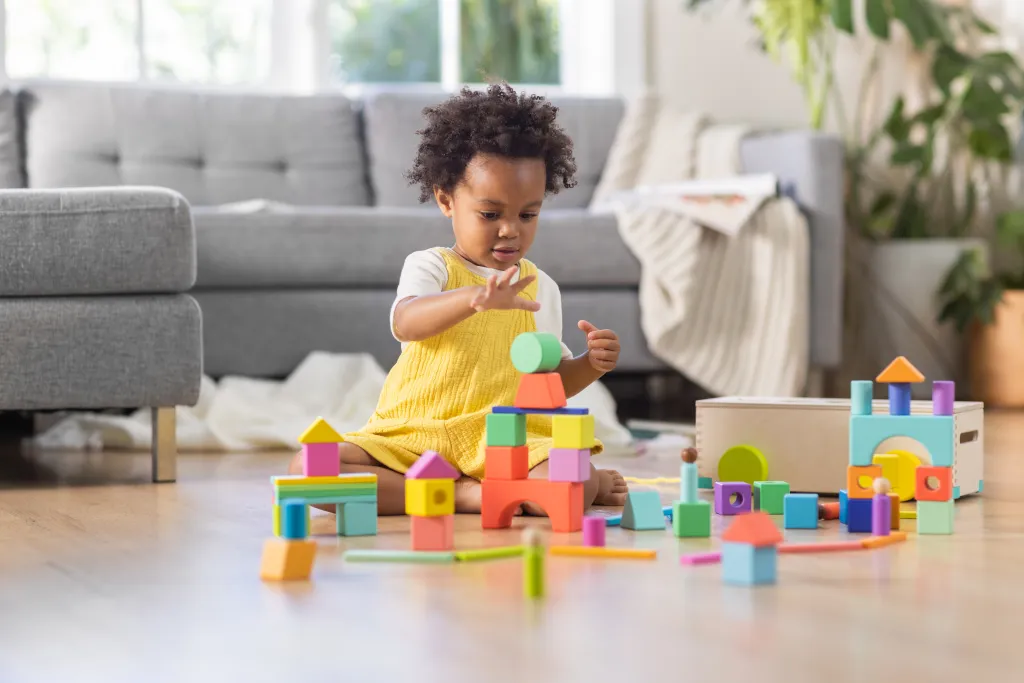
Developmental toys help children develop gross and fine motor skills, such as stacking blocks or threading beads. And, imaginative play toys, which allow children to use their imagination and creativity to act out different scenarios and tell stories - imaginative play.
Playing with toys can also have a positive impact on a child's emotional development. For example, playing with dolls can help children develop empathy and understanding of emotions while playing with action figures or vehicles can help children learn about power and control.
The Benefits Of Traditional Toys
Improved Cognitive Abilities
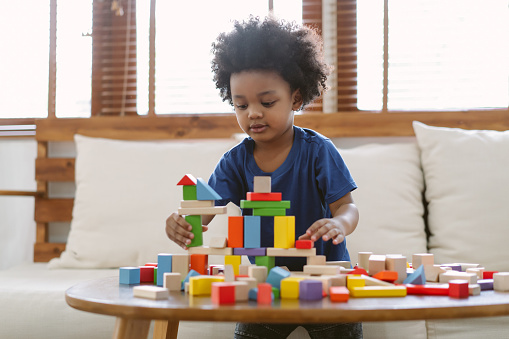
Traditional toys offer an opportunity to stimulate cognitive development. Many involve some type of constructive play which support and reinforce numeracy and or, literacy skills for example, wooden building blocks via number, letter and shape recognition which enhances counting and vocabulary building.
Creative Thinking
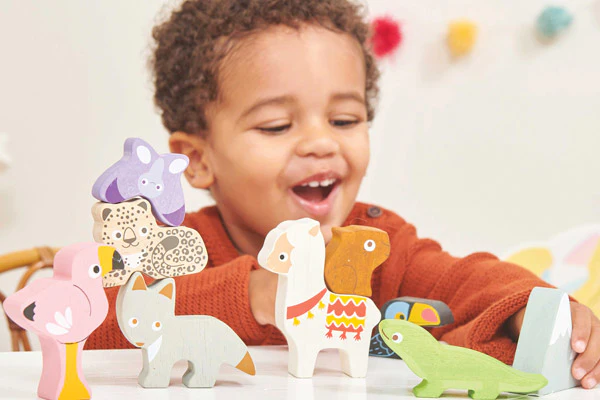
The use of traditional toys also prompts greater creative thinking and free play where children use toys and other additional props to create imaginative scenes. A toy such as the doll’s house, for example, lends itself to a wide range of possible play scenarios engaging vivid use of the child’s imagination with the capacity to offer a soothing and mindful activity.
Language and Communication Skills
It appears that traditional toys have a positive effect on communication between parents and infants. A recent study investigated whether the type of toy used had any impact on parent to infant communication. Results showed that electronic toys resulted in the exchange of fewer words between the child and care provider, meaning that there is less interaction between parents and their children and less engagement in their play. Many traditional style toys support interactive play and social skills such as communication and turn taking – when playing together, children learn to compromise, share, and collaborate as well as developing their language and communication skills.
Our Toys
AfriToys prioritize sustainability and natural materials, providing a tactile experience for children. They stimulate creativity, imagination, and problem-solving skills through open-ended play. These culturally relevant toys enhance motor skills, coordination, and introduce educational concepts. AfriToys aim to support holistic development in children during their early years, fostering a connection to nature, cultural appreciation, and overall growth.